Boot Camp Control Panel Windows 10 Download

Highlights:
- PowerXpress Systems - Added Vulkan Support
- The Talos Principle - Potential version compatibility issues addressed
- Hologram - No longer crashes on launch
Important Notes:
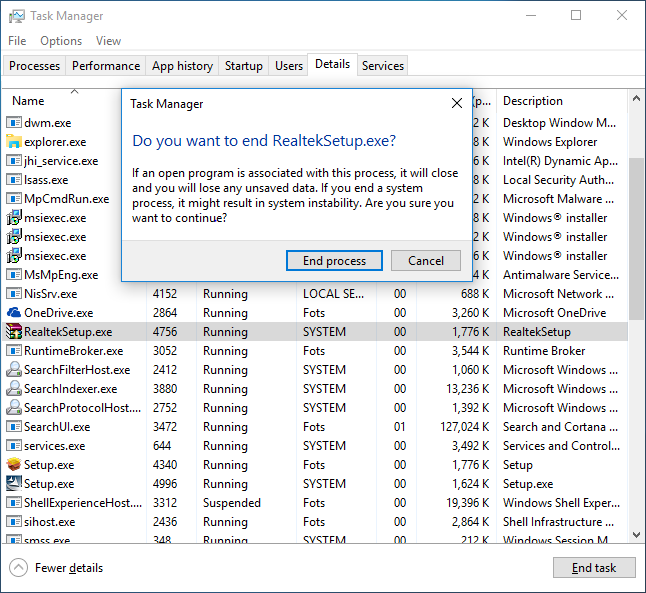
I just installed Windows 10 with Boot Camp. Once the install is complete, the drivers installed fine and a final reboot was completed without issue. Once the install was done I tried to launch the Boot Camp Control Panel and got the error. Installing Boot Camp in Windows 10 running on a Mac computer is easy. But if you want to uninstall Boot Camp or Boot Camp services, the process is little cumbersome. If you navigate to the Control Panel, you will see Boot Camp Services entry, but the problem is that it doesn’t offer an uninstall option. However, with the release of Boot Camp 5.0 for Mac OS X 10.8 Mountain Lion in version 10.8.3, only 64-bit versions of Windows 7 and Windows 8 are officially supported. Boot Camp 6.0 added support for Windows 10. Boot Camp 6.1, available on macOS 10.12 Sierra and later, will only accept new installations of Windows 7 and later; this requirement. Step 5: Install Windows drivers and Boot Camp utility. Windows 10 installs all necessary drivers automatically except Bluetooth and internal speaker. These need to be installed from the original Boot Camp package for MacPro5,1. Download and install 7zip, download Brigadier 0.2.4 app, open Windows command prompt where Brigadier is located and type. If you are experiencing display, keyboard, mouse, audio, built-in camera or microphone issues while running Windows 10 on your Mac, you can repair the Boot Camp drivers to fix issues. You can repair the Boot Camp if the Boot Camp Control Panel is not working properly as well.
- Product is conformant with Vulkan 1.0 Specification.
- This product is based on a published Khronos specification but has not yet passed the Khronos Conformance Test Process. A fully conformant implementation of the Vulkan API will be included in a forthcoming Radeon Software release.
- This driver is intended as beta level support for use solely with Vulkan applications and as such some Radeon Software functionality has been removed. This is including and not limited to support for other Graphics APIs, Radeon Settings and other Radeon Software driver features.
What is Vulkan?
- As a complement to OpenGL, descended from AMD's Mantle, and forged by the industry, Vulkan is a powerful low-overhead graphics API that gives software developers deep control over the performance, efficiency, and capabilities of Radeon GPUs and multi-core CPUs.
NOTE:
- This driver is not intended for use on AMD products running in Apple Boot Camp platforms. Users of these platforms should contact their system manufacturer for driver support.
- When installing the AMD Radeon Software Beta for Vulkan on the Windows operating system, the user must be logged on as Administrator, or have Administrator rights to complete the installation of the AMD Radeon Software Beta for Vulkan.
- The AMD Radeon Software Beta for Vulkan requires Windows 7 Service Pack 1 to be installed.
AMD Desktop Product Family Compatibility:
- AMD Radeon R9 Fury Series Graphics
- AMD Radeon R9 Nano Series Graphics
- AMD Radeon R9 300 Series Graphics
- AMD Radeon R9 200 Series Graphics
- AMD Radeon R7 300 Series Graphics
- AMD Radeon R7 200 Series Graphics
- AMD Radeon HD 8500 - HD 8900 Series Graphics
- AMD Radeon HD 7700 - HD 7900 Series Graphics
AMD APU Product Family Compatibility:
AMD APU series codenamed 'Kaveri', 'Godavari' and 'Carrizo' are only supported by AMD Radeon Software Beta for Vulkan on Windows 7 (32 & 64-bit), Windows 8.1 (64-bit) and Windows 10 (64-bit).AMD APU Product Family Compatibility
Desktop:
- AMD A-Series APUs with Radeon R4, R5, R6, or R7 Graphics
- AMD Pro A-Series APUs with Radeon R5 or R7 Graphics
- AMD Athlon Series APUs with Radeon R3 Graphics
- AMD Sempron Series APUs with Radeon R3 Graphics
- AMD A-Series APUs with Radeon R3, R4, R5, R6, R7, or R8 Graphics
Mobile:
- AMD Pro A-Series APUs with Radeon R5, R6, or R7 Graphics
- AMD FX-Series APUs with Radeon R7 Graphics
- AMD E-Series APUs with Radeon R2 Graphics
- AMD Radeon HD 8180 - HD 8400 Series Graphics
AMD Mobility Radeon Family Compatibility:
- AMD Radeon R9 M300 Series Graphics
- AMD Radeon R7 M300 Series Graphics
- AMD Radeon R5 M300 Series Graphics
- AMD Radeon R9 M200 Series Graphics
- AMD Radeon R7 M200 Series Graphics
- AMD Radeon R5 M200 Series Graphics
- AMD Radeon HD 8500M - HD 8900M Series Graphics
- AMD Radeon HD 7700M - HD 7900M Series Graphics
Known Issues:
- Some AMD PowerXpress systems may experience instability
- Windows re-sizing in some applications may cause an application crash
- HDMI and DP to DVI adapters on Windows 7 may intermittently cause display issues

AMD Issue Reporting Form:
- This driver release incorporates suggestions received through the AMD Issue Reporting Form. To provide us with your feedback, visit the AMD Issue Reporting Form.
How-To Uninstall AMD Radeon Software:
- Start by opening the Control Panel
- For Windows 10/8.1, right-click on the Windows button and select Control Panel from the Context Menu
- For Windows 7, click on the Windows button and select Control Panel from the Start Menu
- In the Control Panel select Programs and Features
- Select AMD Install Manager and then click Uninstall/Change
- Check all items, and then click the Uninstall button.
- Note: If you had others versions of AMD drivers installed previously, you should get an additional prompt providing the options to remove All Versions or Current Version.
- Select All Versions to remove all AMD drivers and application components (recommended).
- Select Current Version will uninstall only the latest version of the drivers and its related components.
- The uninstall process will begin removing drivers and software components.
- Select Restart Now to complete the uninstallation process.
- To verify that the AMD Radeon Software has been removed from the system, return to the Program and Features list, and check that there are no AMD entries. If AMD specific entries are still listed, remove them using the above process.
How-To Install AMD Radeon Software:
- Ensure that any existing versions of AMD Radeon Software on the system have been uninstalled before proceeding with installing a new driver.
- Close all opened applications including anti-virus, firewall, remote-access, or webcam software before attempting the install process.
- Double-click the downloaded file and select Install to begin file extraction process.
- Note: It is recommended to use the default destination folder for installation.
- Select the desired components or keep default selection (recommended) and click Install.
- The drivers and software components will begin installing.
- Note: The screen will flicker whilst the AMD Radeon Software is being installed. If you have multiple displays, some of them may turn black for a few seconds.
- Once the drivers and software have been successfully installed, choose Restart Now
- Note: A system restart is required to complete the installation process.
About Graphics Drivers:
While installing the graphics driver allows the system to properly recognize the chipset and the card manufacturer, updating the video driver can bring about various changes.
It can improve the overall graphics experience and performance in either games or various engineering software applications, include support for newly developed technologies, add compatibility with newer GPU chipsets, or resolve different problems that might have been encountered.
When it comes to applying this release, the installation steps should be a breeze, as each manufacturer tries to make them as easy as possible so that each user can update the GPU on their own and with minimum risks (however, check to see if this download supports your graphics chipset).
Therefore, get the package (extract it if necessary), run the setup, follow the on-screen instructions for a complete and successful installation, and make sure you reboot the system so that the changes take effect.
That being said, download the driver, apply it on your system, and enjoy your newly updated graphics card. Moreover, check with our website as often as possible in order to stay up to speed with the latest releases.
It is highly recommended to always use the most recent driver version available.
Try to set a system restore point before installing a device driver. This will help if you installed an incorrect or mismatched driver. Problems can arise when your hardware device is too old or not supported any longer.

- COMPATIBLE WITH:
- Windows 7 64 bit
Windows 8.1 64 bit
Windows 10 64 bit - file size:
- 302.4 MB
- filename:
- 64bit-amd-radeon-software-beta-vulkan-win10-win8.1-win7-apr19.exe
- CATEGORY:
- Graphics Board
Classic Mac Pro 5,1 (or simply cMP, also 4,1 upgraded to 5,1) is now considered by Apple as vintage. It’s pretty disappointing considering how capable and upgradable these machines still are. Installing Windows is no longer officially supported, but it’s completely possible though not quite easy.
Another challenge is that macOS Mojave 10.14 now implies using Metal-capable GPU while most of them are not able to display Apple boot menu (which you normally see holding the Option key) required to boot into Windows. Basicaly your screenremains black until macOS is loaded. Well, some EFI bootable cards that support boot menu exist but they are released almost 10 years ago and are really outdated. What is more, none of them supports displaying of boot menu with 4k 60hz monitor connected.
This guide is for those who want macOS Mojave + Windows 10 + modern GPU (in our case Sapphire Radeon Pulse RX 580 8GB).
Updated 28 May 2019
Installing Windows 10 in 5 steps
It’s supposed that you have the latest Boot ROM version 144.0.0.0.0. If not, please update first.
Step 1: Use separate drive for Windows
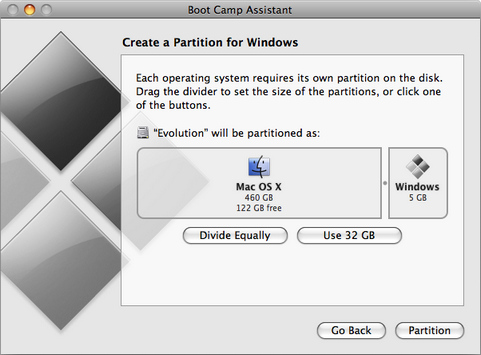
Boot Camp Assistant no longer supports cMP and doesn’t allow creating a separate partition for Windows.Windows has to be installed on a separate drive, which is good actually to avoid messing with partitions in future.
We recommend using the internal SATA II connector in one of four drive bays or alternatively one of two SATA II connectors in the optical drive area. Using the HP 654540-001 3.5” → 2.5” adapter (7$) to place 2.5” SSD in a drive bay can be quite convenient.
Of cause, SATA II (up to 300MB/s) is a bottleneck for modern 2.5” SSDs (up to 550 MB/s where SATA III is preferable) but real life experience shows that the difference is hardly noticable unless you deal with lots of big files (e.g. >1GB where sequential read/write speeds matter) on your system drive.
We didn’t test using PCIe → SATA III adapter or PCIe → NVMe adapter for Windows partition. Many people reported it was not possible in their case. If you successfully did it please let us know in the comments below or via e-mail.
Step 2: Create a bootable Windows 10 DVD disk
Warning: DO NOT install Windows from a USB flash drive. It has been discovered that Windows when installed in EFI mode is corrupting the Mac Pro’s firmware by signing it with multiple Secure Boot (X.509) certificates. Also, you wouldn’t be able to boot into Windows after selecting its drive as bootable in macOS Preferences → Startup disk. Therefore Windows should only be installed in Legacy BIOS mode from an optical drive.
Make sure that your Windows 10 ISO file fits on the DVD disk, in our case we had to burn Windows 10 1803 ISO (64-bit) to a single-layer DVD+R disc 4.7GB.
Burning a DVD disk under macOS can be done with the following Terminal command:
On Windows we recommend using the free ImgBurn app.
Step 3: Boot from your Windows 10 DVD disk
Turn on your mac while holding the “C” key to boot from the optical disk (if you have PCIe drives installed and can’t boot from the disc, remove those PCIe adapters).Proceed with installation normally until you see the “Where do you want to install Windows” drive selection screen.
Step 4: Format the target drive
Press Shift+F10 to launch command prompt. Type the following commands:
Now make sure to select the correct target drive number N (NOT your macOS disk), after that type:
You should now see your drive as Unallocated space.
Press the “New” button to create necessary partitions. There should be only two partitions (for legacy installation, EFI mode creates four) automatically created:
Select the newly created partition 2 and continue with installation normally. Your mac will be rebooted twice.Every reboot do not forget entering the boot menu (by holding the Option key) and selecting ‘Windows’ boot drive there. When finished, boot into Windows.
Step 5: Install Windows drivers and Boot Camp utility
Windows 10 installs all necessary drivers automatically except Bluetooth and internal speaker. These need to be installed from the original Boot Camp package for MacPro5,1.Download and install 7zip, download Brigadier 0.2.4 app, open Windows command prompt where Brigadier is located and type:
When finished, it will create a folder BootCamp-031-11269, you need to install these for Bluetooth and internal speaker correspondingly, make sure you run the command prompt as administrator:
Now we need newer BootCamp drivers intended for iMacPro1,1:
When finished, it will create a folder BootCamp-041-55643, you need to run this command:
When finished, reboot. We also recommend running Apple Software Update to update Wifi drivers:
You probably don’t want to forget installing our awesome Macs Fan Control app, do you? :)
Switching between macOS Mojave & Windows
When you’re in macOS, use Preferences → Startup disk to select a boot drive:
When you’re in Windows, use the Boot Camp Control Panel from your Windows tray to select a boot drive:
Boot Camp Control Panel Windows 10 Download Filehippo
This guide is based on this MacRumors thread. Special thanks to h9826790 for sharing his useful experience. Any comments are welcome.